115 év egyetlen életben – Japán legidősebb emberének története,lehet üzenet neked is
Miről olvashatsz a cikkben?
A cikk Shigeko Kagawa, Japán 115 éves korában elhunyt legidősebb emberének különleges életútját mutatja be. Megismerheted, hogyan dolgozott orvosként még 80 éves kora után is, és hogyan vett részt 109 évesen a tokiói olimpiai lángfutásban.
A történet azonban nem csupán a hosszú életről szól. Arról is, hogy mennyire fontos lehet, hogy legyen célod, maradj kíváncsi, mozogj, tarts kapcsolatot másokkal, és minden életkorban találj olyan dolgokat, amelyek örömet és értelmet adnak a mindennapjaidnak.
A cikk arra hív, hogy te is állj meg egy pillanatra, és gondold végig: nem az a legfontosabb, hány évet élsz, hanem az, hogy mennyi valódi életet teszel ezekbe az évekbe.
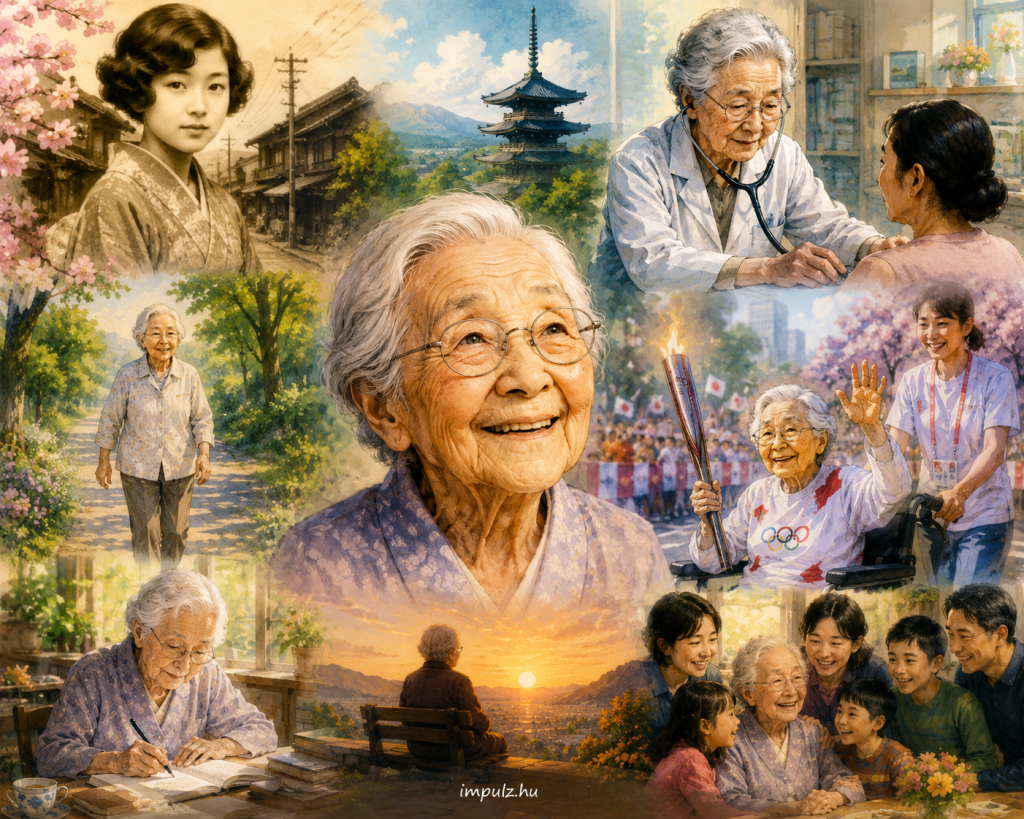
115 év egyetlen életben – Japán legidősebb emberének története üzenet neked is
Vannak életek, amelyek egyszerűen nem férnek bele egyetlen mondatba. És vannak emberek, akiknek a története arra késztet, hogy egy pillanatra megállj, és más szemmel nézz a saját életedre.
Shigeko Kagawa 115 évet élt, 2026. augusztus 27-én, 115 éves korában hunyt el a japán Nara prefektúrában. Halálát augusztus 31-én jelentették be és ezzel Japán legidősebb emberének címe a 114 éves Fuyo Kishimotóra szállt.
De amikor egy 115 éves ember életéről olvasol, valójában nem csupán egy számot látsz, egy egész korszakot látsz.
Egy olyan életet, amely 1911-ben kezdődött, és végigkísérte a 20. század szinte teljes történetét, majd még a 21. század változásait is. Kagawa asszony olyan világba született, amelyben még egészen másképp éltek az emberek. Más volt a közlekedés, az orvoslás, a kommunikáció, a munka és a mindennapi élet, nem egyszerűen szemlélte a változásokat, részt vett bennük.
Orvosként élte le élete jelentős részét
Shigeko Kagawa orvosi diplomát szerzett, majd kórházban dolgozott, szülészeten, nőgyógyászatban és belgyógyászatban is. 1937-ben saját rendelőt nyitott Nara prefektúrában, és még 80 éves kora után is folytatta orvosi munkáját.
Gondolj bele egy pillanatra!
Miközben sok ember már jóval korábban visszavonul a munkától, ő hosszú évtizedeken keresztül továbbra is másokon segített.
Talán éppen ebben van történetének egyik legfontosabb üzenete.
Nem feltétlenül az tart frissen, hogy hány éves vagy.
Sokszor sokkal fontosabb az, hogy van-e még valami, amiért reggel felkelsz.
Van-e valaki, akinek szüksége van rád?
Van-e feladatod?
Van-e érdeklődés benned a világ iránt?
Van-e valami, amit még szeretnél megtanulni, megtapasztalni vagy egyszerűen csak megélni?
Kagawa életében ezek a dolgok nagyon sokáig jelen voltak.

Vedd meg most, az 5 forintos forgalmi érme emlékváltozatait! magyarerme.hu
109 évesen még olimpiai fáklyát vitt
Talán az egyik legkülönlegesebb pillanat az volt, amikor 2021-ben, 109 éves korában részt vett a tokiói olimpiai lángfutásban.
Ezzel ő lett a világ legidősebb olimpiai fáklyavivője. A szakaszát kerekesszékben teljesítette, amelyet a menye tolt.
És ez nem csupán egy rekord, ez egy üzenet. Mert könnyű azt mondani magadnak,
„Én már ehhez túl idős vagyok.”,
„Erről már lemaradtam.”
„Nekem ez már nem való.”
„Majd máskor.”
De Kagawa története megmutat valami fontosat.
Az életkor valóban hoz korlátokat, de nem kell minden lehetőségről lemondanod csak azért, mert telnek az évek.
Lehet, hogy te már nem ugyanúgy tudsz futni, mint húszévesen.
Lehet, hogy nem bírsz mindent úgy, ahogy régen.
Lehet, hogy lassabban mész.
De ettől még lehet célod.
Lehet örömöd.
Lehet kíváncsiságod.
Lehet még olyan pillanat előtted, amelyről ma még nem is tudod, hogy mennyire fontos lesz.

Vedd meg most, a 20 forintos forgalmi érmek emlék változatait! magyarerme,hu
A hosszú élet nem feltétlenül a nagy titkokról szól
Amikor valaki 100 év felett él, az emberek szinte azonnal keresni kezdik a titkot.
Mit evett?
Mennyit mozgott?
Mit csinált másképp?
Mi volt a napi rutinja?
Kagawa egyik saját magyarázata egyszerű volt, úgy gondolta, hosszú életében szerepe volt annak, hogy egész életében sokat gyalogolt. Orvosi munkája során is sokat közlekedett gyalog, és hosszú időn át aktív maradt.
Persze ebből nem lehet azt mondani, hogy ha minden nap sokat sétálsz, akkor biztosan 115 évig fogsz élni.
Az élet ennél sokkal összetettebb, de egy dolog nagyon érdekes.
A rendszeres mozgás, a kapcsolatok, az aktivitás, a kíváncsiság és az, hogy legyenek számodra fontos dolgok, nemcsak a testedre lehetnek hatással.
A közérzetedre és arra is, ahogyan saját magadat látod.
Ha azt érzed, hogy még szükség van rád, az egészen más lelkiállapotot teremthet, mint amikor úgy gondolod, hogy már semmi dolgod nincs a világban.
Ha van miért felkelned, könnyebb elindulni.
Ha van kit felhívnod, kevésbé érzed magad egyedül.
Ha van mit megtanulnod, a kíváncsiság továbbra is mozgásban tart.
Ha pedig van valami, amit szeretsz, akkor még egy hétköznapi nap is jelenthet valamit.

Vedd meg most, az 50 forintos forgalmi érme emlékváltozatait! magyarerme.hu
Nem a 115 év a legfontosabb
Talán furcsán hangzik, de Shigeko Kagawa történetében számomra nem is a 115 év a legérdekesebb. Hanem az, hogy mit kezdett ezzel a 115 évvel. Mert lehet valaki 90 éves úgy, hogy már régen feladta a kíváncsiságát. Lehet valaki 80 évesen úgy élni, hogy még mindig tervei vannak. Lehet valaki fiatal, mégis teljesen kiégett, és lehet valaki idős, mégis tele életkedvvel. Az évek száma önmagában nem mondja meg, mennyi élet van benned. Talán ezért érdemes neked is időnként feltenned magadnak néhány egyszerű kérdést.
Mikor nevettél utoljára igazán?
Mikor csináltál valamit csak azért, mert örömet okozott?
Mikor hívtál fel valakit úgy, hogy nem akartál tőle semmit?
Mikor tanultál valami újat?
Mikor mentél el sétálni úgy, hogy közben nem siettél sehova?
Mikor mondtad azt magadnak: „Ezt még szeretném megélni”?
Ezek egyszerű kérdések, mégis sokat elárulhatnak arról, hogyan vagy valójában.
Lifestream – Keringési rendszer segítője!
Egyensúlyba hozza a vérnyomást!

A természet gyógyító ereje! Érdekel >>
A hosszú élet nem csak az évekről szól
Kagawa története arra is emlékeztethet, hogy az élet nem egyetlen nagy eseményből áll.
Hanem apró napokból.
Egy reggeli sétából.
Egy beszélgetésből.
Egy munkából, amelynek értelme van.
Egy családi látogatásból.
Egy kedvenc ételből.
Egy újság elolvasásából.
Egy új dolog megtanulásából.
Egy mosolyból.
Egy ölelésből.
És talán éppen ezekből az apró dolgokból áll össze végül az, amit életnek nevezünk. Nem tudod, hány éved van még, én sem tudom. Egyikünk sem tudja, de azt tudod, hogy a mai nap a tiéd és hogy mit kezdesz vele, abban sokkal több lehetőség van, mint amennyit egy rossz nap után gondolnál.

Vedd meg most, a 100 forintos forgalmi érme emlékváltozatait! magyarerme.hu
Mit taníthat neked Shigeko Kagawa élete?
• Ne mondd túl hamar, hogy „már késő”, lehet, hogy egy lehetőség éppen most talál rád.
• Maradj kíváncsi. Tanulj valamit, olvass, beszélgess, fedezz fel új dolgokat.
• Mozdulj meg. Nem kell feltétlenül sportolónak lenned. Egy séta is lehet kezdet.
• Legyen valami, amiért reggel érdemes felkelned.
• Tarts kapcsolatot azokkal, akik fontosak neked.
• Ne csak az éveidet számold, hanem azt is, mennyi valódi pillanatot élsz meg.
• Ha valami örömet ad, ne szégyelld megélni.
• Ne hagyd, hogy mások életkorról alkotott véleménye meghatározza, mire vagy képes.
• Talán a legfontosabb: ne várj mindig egy „jobb időre”. Sokszor a mostani nap az a nap, amelyet valóban a kezedben tartasz.
Shigeko Kagawa 115 évesen távozott, de a története nem arról szól, hogy mennyire hosszú lehet egy ember élete. Hanem arról, hogy mennyi mindent lehet beletenni egyetlen életbe. Amikor ma este ránézel a saját életedre, talán érdemes nem azt kérdezned, „Mennyi időm van még?” Hanem ezt, „Mit szeretnék még igazán megélni?”
Mert erre a kérdésre már te adhatod meg a választ.
A világ legidősebb elismert emberei:
Egyesült Királyság (Anglia) Ethel Caterham Születési idő: 1909. augusztus 21. Kor: 117 éves
A brazil João Marinho Neto, aki 1912. október 5-én született, most 114 éves.
A valaha élt legidősebb ember: A francia Jeanne Calment, aki igazoltan 122 év és 164 napot élt (1875–1997 között).
💎 írta, Nyitrai József 2026.09.02.
💎 rajz: Mi
💎impulz.hu
115 Years in One Lifetime – The Story of Japan’s Oldest Person Has a Message for You Too
What can you read about in the article?
The article tells the remarkable life story of Shigeko Kagawa, Japan’s oldest person, who passed away at the age of 115. You can discover how she continued working as a doctor even after the age of 80 and, at 109, took part in the Tokyo Olympic torch relay.
But this story is about much more than longevity. It is also about the importance of having a purpose, staying curious, keeping active, maintaining meaningful connections, and finding things that bring joy and meaning to your everyday life at every age.
The article invites you to pause for a moment and ask yourself: it is not only about how many years you live, but how much real life you put into those years.
Some lives simply cannot be captured in a single sentence. And there are people whose stories make you stop for a moment and look at your own life from a different perspective.
Shigeko Kagawa lived for 115 years.
She passed away on August 27, 2026, at the age of 115 in Nara Prefecture, Japan. Her death was announced on August 31, and with her passing, the title of Japan’s oldest person passed to 114-year-old Fuyo Kishimoto.
But when you read about the life of someone who lived to 115, you are not really looking at a number.
You are looking at an entire era.
Her life began in 1911 and stretched across almost the entire history of the 20th century, continuing into the rapidly changing world of the 21st century. Kagawa was born into a world where everyday life was completely different. Transportation, medicine, communication, work and ordinary daily routines had little in common with what we know today.
And she did not simply watch the world change.
She was part of that change.
Vedd meg most, a 200 forintos forgalmi érmek emlékváltozatait! magyarerme,hu
She spent much of her life as a doctor
Shigeko Kagawa earned a medical degree and went on to work in hospitals, including in obstetrics, gynecology and internal medicine. In 1937, she opened her own medical practice in Nara Prefecture and continued working as a doctor even after the age of 80.
Think about that for a moment.
While many people retire from work much earlier, she continued helping others for many decades.
Perhaps that is one of the most important messages hidden in her story.
It is not necessarily your age that keeps you mentally and emotionally fresh.
Often, what matters much more is whether you still have something worth getting up for in the morning.
Is there someone who needs you?
Do you still have a purpose?
Are you still interested in the world around you?
Is there something you would like to learn, experience or simply enjoy?
These things remained part of Kagawa’s life for a remarkably long time.
Magyar várak sorozat – Vedd meg most magyarerme.hu
At 109, she carried the Olympic torch
Perhaps one of the most extraordinary moments came in 2021, when she took part in the Tokyo Olympic torch relay at the age of 109.
She became the oldest person in the world to take part in an Olympic torch relay. She completed her section in a wheelchair, which was pushed by her daughter-in-law.
And this was not simply a record.
It was a message.
Because it is easy to tell yourself:
“I’m too old for this now.”
“I’ve already missed my chance.”
“This isn’t for someone like me anymore.”
“Maybe another time.”
But Kagawa’s story shows you something important.
Age does bring limitations, but you do not have to give up every possibility simply because the years keep passing.
Maybe you cannot run the way you did when you were twenty.
Maybe you cannot do everything as easily as you once could.
Maybe you move a little more slowly.
But you can still have goals.
You can still experience joy.
You can still be curious.
And there may still be moments ahead of you that you cannot even imagine today, moments that could become deeply meaningful.
Vedd meg most, az Erópai Unió Elnökség, emlékérme szettet! magyarerme.hu
A long life is not necessarily about great secrets
Whenever someone lives beyond the age of 100, people immediately begin looking for the secret.
What did they eat?
How much did they exercise?
What did they do differently?
What was their daily routine?
Kagawa herself offered a simple explanation: she believed that walking a lot throughout her life had played a role in her longevity. During her medical career, she often travelled on foot and remained active for many decades.
Of course, this does not mean that if you walk every day, you are guaranteed to live to 115.
Life is much more complicated than that.
But there is something worth thinking about.
Regular movement, meaningful relationships, staying active, remaining curious and having things that matter to you can influence more than just your physical condition.
They can also affect how you feel and how you see yourself.
When you feel that you are still needed, that can create a completely different state of mind than believing you no longer have a place or purpose in the world.
When you have a reason to get up, it can be easier to start the day.
When there is someone you can call, you may feel less alone.
When there is something new to learn, curiosity keeps you moving forward.
And when you have something you truly enjoy, even an ordinary day can feel meaningful.
Vedd meg most, a Mohácsi busójárás ezüst érmet! magyarerme.hu
The 115 years are not the most important thing
It may sound strange, but what I find most interesting about Shigeko Kagawa’s story is not even the fact that she lived to 115.
It is what she did with those 115 years.
Someone can be 90 and have given up on curiosity long ago.
And someone can be 80 and still have plans, hopes and things they want to experience.
You can be young and already feel completely exhausted by life.
And you can be older and still feel full of energy and enthusiasm.
The number of years you have lived does not, by itself, tell you how much life is still inside you.
That is why it may be worth asking yourself a few simple questions from time to time.
When was the last time you laughed wholeheartedly?
When was the last time you did something simply because it made you happy?
When was the last time you called someone without wanting anything from them?
When did you last learn something new?
When did you last go for a walk without being in a hurry to get anywhere?
When did you last say to yourself, “I still want to experience this”?
These are simple questions. And yet, they can tell you a great deal about how you are really doing.

Vedd meg most, az Arany János érme szettet! magyarerme.hu
A long life is not only about the years
Kagawa’s story can also remind you that life is not made up of one great event.
It is made up of small days.
A morning walk.
A conversation.
A job that gives you a sense of purpose.
A visit with family.
A favorite meal.
Reading the newspaper.
Learning something new.
A smile.
A hug.
And perhaps it is precisely these small things that eventually come together to form what we call life.
You do not know how many years you have left.
Neither do I. None of us does.
But you do know that today belongs to you.
And what you choose to do with it may contain far more possibilities than you can see after a difficult day.

Államalapítás 1 000. évfordulója magyarerme.hu
What can Shigeko Kagawa’s life teach you?
• Don’t say “it’s too late” too quickly. A new opportunity may be closer than you think.
• Stay curious. Learn something, read, talk to people and discover something new.
• Keep moving. You do not have to be an athlete. Even a simple walk can be a beginning.
• Have something that makes you want to get up in the morning.
• Stay connected to the people who matter to you.
• Don’t only count your years. Notice how many truly meaningful moments you experience.
• If something brings you joy, allow yourself to enjoy it.
• Don’t let other people’s opinions about age determine what you believe you are capable of.
• And perhaps most importantly: don’t always wait for a “better time.” Very often, today is the day that is actually in your hands.
Shigeko Kagawa left this world at the age of 115. But her story is not really about how long a human life can be. It is about how much you can put into a single lifetime.
And when you look at your own life tonight, perhaps it is worth asking yourself not, “How much time do I have left?” But this, “What do I still truly want to experience?”
Because that is a question only you can answer.
The oldest recognized people in the world: United Kingdom (England) Ethel Caterham Date of birth: August 21, 1909 Age: 117 years old
Brazilian João Marinho Neto, born October 5, 1912, is now 114 years old.
The oldest person ever to live: Frenchwoman Jeanne Calment, who was confirmed to have lived 122 years and 164 days (1875–1997).
💎 Written by József Nyitrai 02.09.2026
💎 image: Mi
💎 impulz.hu