Csendben vesznek el a grammok
Te pedig egyre többet fizetsz ugyanazért
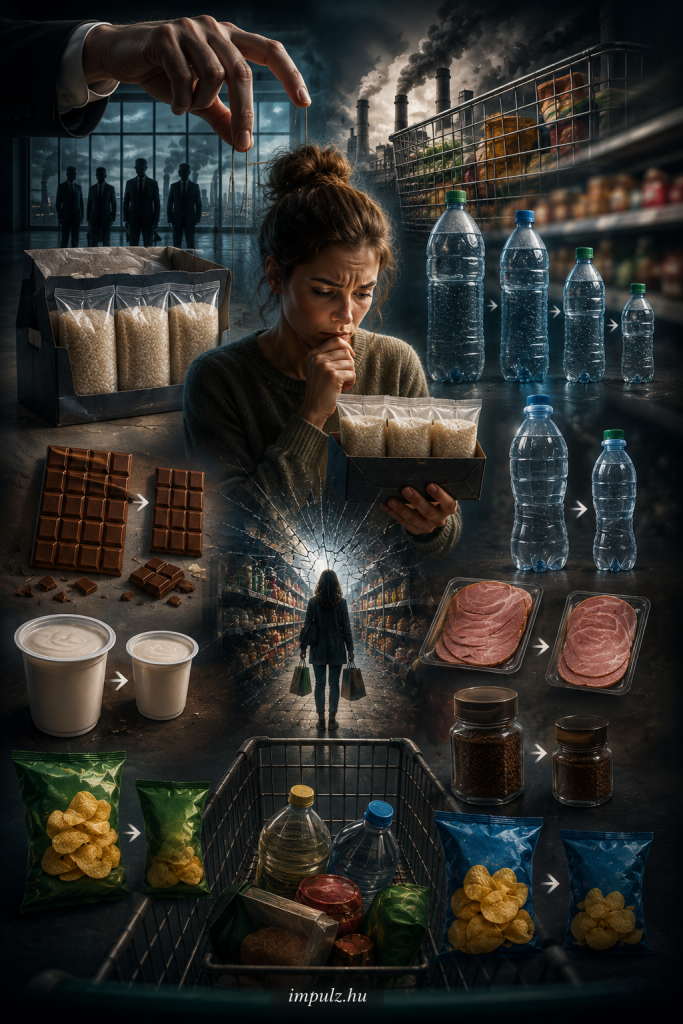
Volt már olyan érzésed, hogy valami nem stimmel a bevásárlásnál?
Ugyanazokat a termékeket teszed a kosaradba, ugyanazokat a márkákat választod, mégis egyre gyorsabban ürül ki a pénztárcád. Persze az árak emelkedését mindenki észreveszi. De van valami, amit sokkal nehezebb észrevenni.
A csomagok egyre kisebbek, a mennyiség egyre kevesebb és közben az ár nemhogy csökkenne, hanem sokszor még emelkedik is.
Lehet, hogy te is találkoztál már ezzel anélkül, hogy tudatosult volna benned. Hiszen a legtöbben megszokásból vásárolunk. Bemegyünk a boltba, levesszük a polcról azt, amit hónapok vagy évek óta veszünk, és már tesszük is a kosárba.
Pontosan erre építenek a nagy vállalatok, arra, hogy sietsz, hogy bízol a megszokásban. Arra, hogy nem minden alkalommal nézed meg a grammokat, a millilitereket vagy a darabszámot.
És miközben azt hiszed, ugyanazt a terméket vásárolod meg, valójában kevesebbet kapsz a pénzedért.
Vedd meg most, az 5 forintos forgalmi érme emlékváltozatait! magyarerme.hu
A csomagolás ugyanaz volt, a tartalom már nem
Én magam is csak véletlenül vettem észre az egyik ilyen változást. Nagyon szeretem a milánói makarónit, ezért havonta legalább kétszer elkészítem. Évek óta ugyanazt a makaróni tésztát vásároltam, megszokásból mindig ugyanaz került a kosárba. Egy alkalommal azonban feltűnt valami. Miután összekevertem a kifőtt tésztát a szósszal, a lábas, amely korábban mindig háromnegyedig volt, most csak félig telt meg. Mivel általában három napra főzök, a különbség azonnal szemet szúrt. Ekkor néztem meg a csomagolást, és derült ki, hogy a korábbi 500 gramm helyett már csak 250 gramm tészta volt a csomagban. A csomagolás szinte ugyanolyannak tűnt, ezért fel sem merült bennem, hogy ekkora változás történt. Ez jól mutatja, mennyire könnyű észrevétlenül kevesebbet kapni ugyanazért a pénzért.
Vedd meg most, a 20 forintos forgalmi érmek emlék változatait! magyarerme,hu
Gondolj csak a négytasakos rizsre.
Évekig megszoktad, hogy egy tasak 200 gramm. Tudod, hány embernek elég, tudod, mennyi készül belőle. Aztán egy nap ugyanaz a doboz kerül a kezedbe, ugyanazzal a színnel, ugyanazzal a logóval, ugyanazzal a megszokott külsővel.
Csak éppen a tasak már nem 200 gramm, hanem 125 gramm, vagy 100 gramm.
A doboz szinte ugyanolyannak tűnik, mégis lényegesen kevesebb van benne.
Ugyanez történik az üdítőkkel és az ásványvizekkel is.
A régi kétliteres palackok helyét lassan átveszik az 1,75 literes, az 1,5 literes vagy még kisebb kiszerelések. A palack formája hasonló. A címke hasonló. A márka ugyanaz.
A különbség csak az, hogy kevesebb terméket viszel haza.
Sokan ilyenkor dühösek lesznek. Mások becsapva érzik magukat. És ez teljesen érthető érzés.
Hiszen nem arról van szó, hogy tudatos döntést hoztál.
Nem arról, hogy kevesebbet akartál vásárolni.
Hanem arról, hogy a változás sokszor szinte észrevétlenül történik.
A cégek számára ez egyszerű üzleti döntés.
Az alapanyagok drágulnak,
A szállítás drágul,
Az energia drágul,
A nyereséget pedig fenn kell tartani.
Vedd meg most, az 50 forintos forgalmi érme emlékváltozatait! magyarerme.hu
Sok vállalat ezért inkább a mennyiséget csökkenti, mert úgy gondolja, a vásárlók könnyebben elfogadják ezt, mintha egyszerre jelentősen emelnék az árat.
Csakhogy a vásárló szempontjából az eredmény ugyanaz, többet fizetsz ugyanazért termékért, vagy még pontosabban, ugyanannyi pénzért kevesebbet kapsz.
Talán te is érezted már azt a furcsa csalódottságot, amikor egy kedvenc terméked gyorsabban elfogyott, mint korábban. Amikor a családi vacsorához már nem volt elég egy csomag. Amikor ugyanannyi bevásárlás után hamarabb kellett visszamenned a boltba.
Nem képzelődtél, Valóban sok termék lett kisebb, vagy kevesebb.
Éppen ezért ma fontosabb, mint valaha, hogy ne csak az árcédulát nézd.
Nézd meg a grammokat, a litereket, az egységárat, mert sokszor ott rejtőzik az igazság.
A tudatos vásárlás nem a spórolásról szól, hanem arról, hogy te dönts, ne a megszokás, vagy a csomagolás döntsön helyetted.
Főleg ne az a látszat, hogy minden ugyanaz maradt.
Mert sokszor éppen azok a változások kerülnek a legtöbbe, amelyeket első pillantásra észre sem veszünk.

Vedd meg most, a 100 forintos forgalmi érme emlékváltozatait! magyarerme.hu
Néhány hétköznapi példa:
- A 4×200 grammos rizstasakból 4×125 vagy 4×100 grammos lett.
- A fűszereket a köménymag, a bors, a bazsalikom és még sorolhatnám, voltak a 40 g kiszerelések, most 30 g, de inkább a 15 g, 10 g -os a jellemző.
- A 2 literes üdítőből 1,75 vagy 1,5 literes kiszerelés lett.
- A joghurt pohara ugyanakkora, de vastagabb az alja, így kevesebb a tartalom.
- A csokoládé tábla kisebb lett, miközben az ára nőtt.
- A felvágottak csomagolása változatlan, de kevesebb grammot tartalmaz.
- A kávé csomagja ugyanúgy néz ki, de kevesebb van benne.
- A chipses zacskó nagy, de egyre több benne a levegő és kevesebb a termék.
A következő bevásárlásnál nézz rá egy pillanatra a számokra is. Lehet, hogy többet fognak elárulni, mint maga a csomagolás.
💎 írta, Nyitrai József 2026.06.29.
💎impulz.hu
Grams are quietly disappearing – And you’re paying more for the same products
Have you ever had the feeling that something just isn’t right when you go grocery shopping?
You put the same products in your cart, choose the same brands, yet your wallet seems to empty faster and faster. Of course, everyone notices rising prices. But there’s something much harder to spot.
Packages are getting smaller, the quantity keeps shrinking, and instead of prices going down, they often continue to rise.
You may have already experienced this without even realizing it. Most of us shop out of habit. We walk into a store, grab the products we’ve been buying for months or even years, and toss them into the cart without a second thought.
That is exactly what many large companies count on. They count on the fact that you’re in a hurry. They count on the fact that you trust familiarity. They count on the fact that you don’t check the grams, milliliters, or quantity every single time.
And while you think you’re buying the same product, you’re actually getting less for your money.
Vedd meg most, a 200 forintos forgalmi érmek emlékváltozatait! magyarerme,hu
The packaging stayed the same, the contents did not
I personally noticed one of these changes completely by accident. I love Milanese macaroni, so I make it at least twice a month. For years, I bought the same brand of macaroni pasta. Out of habit, it always ended up in my shopping cart.
Then one day, something caught my attention.
After mixing the cooked pasta with the sauce, I noticed that the pot, which used to be about three-quarters full, was now only half full. Since I usually cook enough for three days, the difference was impossible to ignore.
That’s when I checked the package.
Instead of the usual 500 grams, the package contained only 250 grams of pasta.
The packaging looked almost identical, so it never even crossed my mind that such a significant change had occurred. It was a perfect example of how easy it is to receive less while paying the same amount of money.
Vedd meg most, a 200 forintos ezüst érme párt! magyarerme.hu
Just think about those four-pouch rice packages.
For years, you got used to each pouch containing 200 grams. You knew how many people it would feed and how much food it would make. Then one day, you pick up the same box, with the same colors, the same logo, and the same familiar appearance.
Except the pouch is no longer 200 grams.
Now it’s 125 grams.
Or even 100 grams.
The box looks almost identical, yet it contains significantly less product.
The same thing is happening with soft drinks and bottled water.
The old 2-liter bottles are gradually being replaced by 1.75-liter, 1.5-liter, or even smaller sizes. The bottle shape looks similar. The label looks similar. The brand is the same.
The only difference is that you’re taking less product home.
Many people feel angry when they discover this. Others feel deceived. And those feelings are completely understandable.
Vedd meg most, a Mohácsi busójárás ezüst érmet! magyarerme.hu
Because it’s not about making a conscious choice.
It’s not about deciding to buy less.
It’s about changes happening so subtly that most people barely notice them.
For companies, this is often a straightforward business decision.
Raw material costs increase.
Transportation costs increase.
Energy costs increase.
And profits still need to be maintained.
As a result, many companies choose to reduce the quantity of a product because they believe consumers will accept that more easily than a large price increase.
But from the consumer’s perspective, the result is exactly the same.
You pay more for the same product.
Or, more accurately, you get less for the same amount of money.
Maybe you’ve experienced that strange disappointment when a favorite product seems to run out faster than it used to. When one package is no longer enough for a family meal. When you find yourself returning to the store sooner than expected after buying the same groceries.
You’re not imagining it.
Many products really have become smaller or contain less than before.
That’s why it’s more important than ever not to focus only on the price tag.
Check the grams.
Check the liters.
Check the unit price.
Because that’s often where the truth is hiding.
Smart shopping isn’t just about saving money.
It’s about making informed decisions.
Don’t let habit decide for you.
Don’t let the packaging decide for you.
And most importantly, don’t let the illusion that nothing has changed decide for you.
Because the changes that cost us the most are often the ones we don’t notice at first glance.
Vedd meg most, az Erópai Unió Elnökség, emlékérme szettet! magyarerme.hu
A few everyday examples
• A 4 × 200 g rice package becomes 4 × 125 g or 4 × 100 g.
• Spices such as cumin, black pepper, basil, and many others used to come in 40-gram packages. Today, 30-gram packs are common, but in many cases 15-gram or even 10-gram packages have become the standard.
• A 2-liter soft drink becomes a 1.75-liter or 1.5-liter bottle.
• A yogurt cup stays the same size, but the bottom is thicker, leaving less product inside.
• A chocolate bar becomes smaller while the price increases.
• Cold-cut packages look unchanged but contain fewer grams.
• A coffee package looks exactly the same but contains less coffee.
• A bag of chips remains large, but there is more air and less product inside.
The next time you go shopping, take a moment to look at the numbers.
They may tell you far more than the packaging ever will.
💎 Written by: József Nyitrai 29.06,2026
💎impulz.hu