Saját otthon helyett örökös albérlet?
Miről olvashatsz a cikkben?
A cikk azt mutatja be, miért lehet hosszú távon veszélyes, ha a saját otthon megteremtése helyett egész életedben csak albérletben élsz, és közben nem építesz vagyont vagy megtakarítást. Szó esik arról, hogyan növelheti a kiszolgáltatottságot a folyamatosan emelkedő lakbér, különösen idősebb korban, amikor már kevesebb lehet a jövedelmed. Megnézzük, milyen különbség lehet aközött, hogy a lakhatásod egy saját tulajdonú otthonhoz, vagy más tulajdonának folyamatos finanszírozásához kapcsolódik. A cikk arra is felhívja a figyelmedet, hogy ne csak a mai lehetőségeket nézd, hanem gondolj a tíz, húsz vagy harminc év múlva várható helyzetedre is. A végén konkrét, mindennapi példák segítenek megérteni, miért fontos a saját biztonságod és vagyoni háttered tudatos építése.
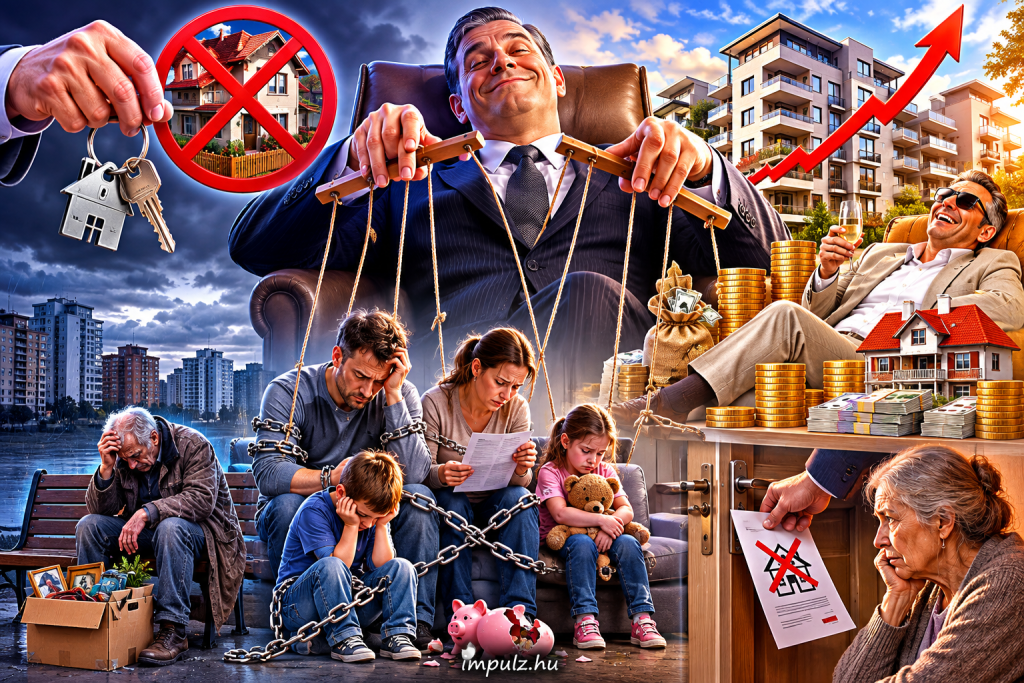
A biztonság vagy a kiszolgáltatottság felé vezet az új lakásmodell?
Egy lakásprogram első hallásra nagyon jól hangozhat. Olcsóbbnak tűnő lakhatás, kisebb kezdeti teher, kevesebb gond a hitellel, és az az érzés, hogy végre könnyebb lesz önálló életet kezdened. De van egy kérdés, amit nem szabad elhallgatni: mi történik veled tíz, húsz vagy harminc év múlva, ha közben semmilyen saját tulajdonod nem lesz? Mert nem mindegy, hogy valaki átmenetileg bérel egy lakást, vagy egész életére bérlővé válik.
A bérlés önmagában nem rossz, sőt bizonyos élethelyzetekben kifejezetten jó döntés lehet. Ha fiatal vagy, költözöl, még keresed a helyed, külföldön dolgozol, vagy egyszerűen nem akarsz hosszú évekre elköteleződni, a bérlakás szabadságot adhat.
A probléma akkor kezdődik, amikor a bérlés már nem választási lehetőség, hanem az egyetlen elérhető életforma.
Gondolj bele egy pillanatra!
Dolgozol évtizedeken keresztül. Minden hónapban fizeted a lakhatásod árát. Fizeted a rezsit, az élelmiszert, a közlekedést, az adókat, a mindennapi kiadásokat. Ha pedig bérelsz, minden hónapban újra és újra elő kell teremtened azt a pénzt, amelyből más tulajdonát használod. Közben mi marad neked?

Vedd meg most, az 5 forintos forgalmi érme emlékváltozatait! magyarerme.hu
Ez az egyik legfontosabb kérdés, amelyet egy lakáspolitikáról szóló vita során fel kell tenni.
Mert a tulajdon nem csupán egy lakásról szól. A saját otthon biztonságot, kiszámíthatóságot és egyfajta mozgásteret is jelenthet. Ha egyszer kifizetted, nem kell minden hónapban ugyanúgy tartanod attól, hogy emelkedik a bérleti díj, felmondják a szerződésedet, vagy egy tulajdonos úgy dönt, hogy más célra használja az ingatlant.
Bérlőként viszont folyamatosan függsz a körülményektől, függsz a bérbeadótól, a piaci áraktól, a fizetésedtől. Idősebb korban különösen fontos kérdéssé válik, hogy miből fogod mindezt finanszírozni. Ma talán azt mondod: „Majd csak lesz valahogy”, de vajon ugyanezt fogod mondani húsz, vagy harminc év múlva is. Amíg fiatal vagy és dolgozol, könnyebb alkalmazkodni. Ha emelkedik a lakbér, talán vállalsz több munkát. Ha kisebb lakás kell, költözöl, ha másik városban kapsz munkát, továbbállsz. De mi történik akkor, amikor már idősebb vagy?
A nyugdíjad valószínűleg nem fog olyan ütemben növekedni, ahogy egy lakás bérleti díja vagy a megélhetési költségek emelkednek. Ha pedig nincs saját lakásod, nincs olyan vagyoni háttér mögötted, amelyhez szükség esetén hozzányúlhatsz. Ezért nagyon veszélyes lehet az a gondolkodás, amely szerint:
Vedd meg most, a 20 forintos forgalmi érmek emlék változatait! magyarerme,hu
„Ne vegyél lakást! Ne legyen saját tulajdonod! Bérelj egész életedben! A pénzedet pedig költsd el, amíg fiatal vagy!”
Ez valóban kényelmesnek tűnhet, de nem az!
Csakhogy a döntéseidnek van egy másik oldala is, ha minden megkeresett pénzedet elköltöd és közben nem építesz fel semmilyen vagyont, akkor egyre kiszolgáltatottabbá válhatsz. Nem feltétlenül egyik napról a másikra, éppen ez benne a veszélyes. Évek alatt, évtizedek alatt. Amikor még fiatal vagy, ezt talán nem érzed. Van munkád, van fizetésed, vannak terveid és úgy gondolod, hogy mindig lesz lehetőséged újrakezdeni.
De az élet nem mindig úgy alakul, ahogy eltervezed?
Lehetsz munkanélküli, változhat a családi helyzeted, érhet baleset, megemelkedhet a lakhatási költséged, lehetnek olyan időszakok, amikor kevesebbet keresel. Egyszer eljön az idő, amikor már nem tudsz ugyanúgy dolgozni, mint korábban.
A saját otthon egyik legnagyobb értéke éppen az lehet, hogy idővel csökkenti a lakhatással kapcsolatos kiszolgáltatottságodat. Egy kifizetett lakás nem tesz automatikusan gazdaggá, de örök érték, adhat egy olyan alapot, amelyre építhetsz.
Számold ki, lehet egy lakás drága, de a kamatok és a költségek lehet, hogy kevesebb havi kiadást jelentenek, mint az albérlet és mégis csak a sajátodat fizeted, ami a tiéd marad. Ha nincs tulajdonod, minden hónapban újra meg kell teremtened a lakhatásod költségét. Közben a lakbérek folyamatosan emelkednek, egyre nagyobb részt vihet el a jövedelmedből maga a lakhatás.

Vedd meg most, az 50 forintos forgalmi érme emlékváltozatait! magyarerme.hu
Ez pedig könnyen egy ördögi körhöz vezethet.
Magasabb lakbér.
Kevesebb félretehető pénz.
Kevesebb megtakarítás.
Nagyobb kiszolgáltatottság.
Még kevesebb lehetőség arra, hogy saját otthont teremts.
Végül egy olyan élethelyzet, amelyben már nem te választasz, hanem az anyagi lehetőségeid választanak helyetted. Ezért fontos, hogy ne csak azt nézd, mennyibe kerül egy lakás ma, azt is nézd meg, mit jelent számodra húsz vagy harminc év múlva.
A lakhatás nem csupán havi kiadás, a lakhatás a jövődről is szól.
Arról, hogy amikor megöregszel, lesz-e egy hely, amelyről biztosan tudod: ez az otthonom.
Arról, hogy ha egyszer kevesebb lesz a jövedelmed, marad-e valamid, ami biztonságot ad.
Arról, hogy a gyermekeidnek tudsz-e valamit továbbadni.
Arról is, hogy egy váratlan élethelyzetben van-e valamilyen vagyoni tartalékod.

Vedd meg most, a 100 forintos forgalmi érme emlékváltozatait! magyarerme.hu
Nem az a lényeg, hogy mindenáron lakást kell-e vásárolnod. Nem mindenki tud lakást venni és nem minden élethelyzetben ez a legjobb döntés. A valódi kérdés az, hogy tudatosan építed-e a saját biztonságodat, a jövődet, a családod jövőjét. Lehet ez saját ingatlan, megtakarítás, másfajta vagyon, többféle lábon álló pénzügyi háttér.
A lényeg az, hogy ne úgy éld le az életedet, hogy közben minden hónapban nulláról kell újrakezdened. Mert a fiatal kori szabadság és az időskori kiszolgáltatottság között néha nagyon vékony a határ. Ma azt mondhatod: „Én inkább bérelek, mert így szabad vagyok.”
De ha közben semmilyen vagyont nem építesz, később könnyen kiderülhet, hogy amit szabadságnak hittél, az valójában függőség volt.
És itt van az egész kérdés egyik legfontosabb része, ki jár jól akkor, ha te egész életedben bérlő maradsz?
A tulajdonos számára a lakás vagyontárgy, te pedig minden hónapban fizetsz azért, hogy használhasd. Ha a lakás értéke nő, a tulajdonos vagyona nőhet, ha a bérleti díj emelkedik, a tulajdonos bevétele növekedhet. Te viszont ugyanazért a lakhatásért többet fizetsz.
Vedd meg most, a 200 forintos forgalmi érmek emlékváltozatait! magyarerme,hu
Ez nem feltétlenül jelenti azt, hogy minden ingatlantulajdonos rosszat akar, vagy hogy minden bérbeadó ki akarja használni a bérlőt. Erről nem lehet általánosítani.
De a rendszer működését érdemes józanul látni, a tulajdonosnak vagyona van, a bérlőnek pedig folyamatos kiadása. Ezért neked is érdeked, hogy legyen valamid, ami a sajátod, vagy legalább legyen olyan megtakarításod és vagyoni háttered, amely nem engedi, hogy teljesen kiszolgáltatottá válj.
Ne engedd, hogy bárki azt mondja neked: „A tulajdon felesleges, csak költsd el a pénzed!”
Gondolkodj hosszabb távon, mert lehet, hogy ma egy új telefon, egy drága nyaralás vagy egy új autó sokkal látványosabb örömöt ad.
De húsz év múlva lehet, hogy egészen más lesz fontos, egy biztos otthon, tehermentes ingatlan, megtakarítás, egy olyan pénzügyi tartalék, amelyhez hozzá tudsz nyúlni, ha baj van.
Az élet egyik legnagyobb hibája lehet, ha csak a mai napot nézed és közben elfelejted, hogy egyszer eljön a holnap is. Van még valami, a kiszolgáltatottság nemcsak pénzügyi kérdés, lelkileg is megterhelő lehet, ha állandóan attól kell tartanod, hogy vajon jövőre meg tudod-e fizetni ugyanazt a lakást.
Mi történik, ha a tulajdonos emel?
Mi történik, ha el akarja adni?
Mi történik, ha költöznöd kell?
Mi történik, ha már nem tudsz annyit dolgozni?
Mi történik, ha baleset ér?
Mi történik, ha a tulajdonos meghal?
Ezek a kérdések hosszú távon bizonytalanságot teremthetnek.

Vedd meg most, a 200 forintos ezüst érme párt! magyarerme.hu
A saját otthon viszont sok ember számára nem egyszerűen négy fal, hanem kapaszkodó. Egy hely, ahol nem kell attól tartanod, hogy egyik napról a másikra elveszítheted a lakhatásodat egy másik ember döntése miatt.
Ezért mielőtt valaki azt mondja neked, hogy „ne legyen semmid”, állj meg egy pillanatra.
Kérdezd meg, „Mi lesz velem akkor, amikor már nem leszek fiatal?„
Miből fizetem majd a lakhatást?
Miből élek?
Mekkora lesz akkor a jövedelmem?
Milyen tartalékaim lesznek?
Lesz-e saját otthonom?
Lesz-e valamim, amit a gyermekeimnek átadhatok?
És ha egyetlen hónapban nem tudom kifizetni a lakbért, mennyire vagyok biztonságban?
Ezekre a kérdésekre nem lehet egyetlen politikai szlogennel válaszolni, és nem is szabad.
A lakhatás hosszú távú életstratégia, a fiataloknak lehetőséget kell adni arra, hogy saját otthont teremtsenek.
Magyar várak sorozat – Vedd meg most magyarerme.hu
A bérlakásrendszerre is szükség van.
De közben nem szabad olyan világot létrehozni, ahol a saját tulajdon megszerzése, csak egy szűk, vagyonos réteg kiváltsága, miközben a többség évtizedeken keresztül fizeti mások vagyonának gyarapodását.
Mert ha egy egész társadalomnak azt mondod, „Ne legyen semmid!”, akkor előbb-utóbb nemcsak a pénztárcáját veszítik el az emberek. Hanem a biztonságérzetüket, a mozgásterüket és a jövőbe vetett bizalmukat is. Ezért neked nem azt kell eldöntened, hogy „lakást kell vennem vagy bérelnem”.
Azt kell eldöntened, hogy hogyan szeretnél biztonságot teremteni magadnak és a családodnak!
Ha bérelsz, legyen megtakarításod.
Ha tudsz, építs vagyont.
Ha saját lakást szeretnél, keress olyan lehetőséget, amely nem sodor kezelhetetlen adósságba.
Ne vállalj olyan hitelt, amely egyetlen rossz élethelyzetben összeroppanthat.
Ne költs el mindent csak azért, mert ma még megteheted és a jelenlegi kormány ezt akarja elérni.
Ne hidd el senkinek, hogy a jövőd nem számít, mert igen is számít, nagyon is számít.
A legfontosabb kérdés nem az, hogy ma mennyire tűnik kecsegtetőnek egy lakhatási lehetőség, hanem az, hogy mit ad neked harminc év múlva.

Vedd meg most, a Mohácsi busójárás ezüst érmet! magyarerme.hu
Konkrét példák a mindennapokból
• Fiatal bérlő: ma 180 ezer forintos lakbért fizet, és azt gondolja, hogy ez még kezelhető. Ha azonban évről évre emelkedik a lakhatás költsége, egy idő után egyre kevesebb pénze marad megtakarításra.
• Saját lakással rendelkező család: ugyan hosszú éveken keresztül fizette a hitelt, de amikor a lakás tehermentessé válik, a lakhatási kiadása jelentősen csökkenhet.
• Idős bérlő: már nem tud annyit dolgozni, mint korábban. A nyugdíja mellett azonban továbbra is fizetnie kell a lakbért. Ha a bérleti díj magas, a jövedelmének jelentős részét elviheti a lakhatás.
• Megtakarítással rendelkező bérlő: nincs saját lakása, de rendszeresen félretesz és vagyont épít. Egy váratlan helyzetben ezért nagyobb mozgástere lehet, mint annak, aki minden hónapban elkölti az összes pénzét.
• A „majd lesz valahogy” életforma: valaki évtizedeken keresztül nem tesz félre, mert úgy gondolja, hogy mindig lesz munkája és mindig ki tudja fizetni a lakbért. Egy váratlan jövedelemcsökkenés azonban gyorsan felboríthatja az egész életét.
• A tudatos döntés: valaki bérel, mert most ez felel meg neki, de közben megtakarít, képezi magát, vagyont épít, és folyamatosan keresi annak lehetőségét, hogyan tudja csökkenteni a jövőbeni kiszolgáltatottságát.
Te döntesz arról, milyen életet szeretnél, de amikor a lakhatásról van szó, ne csak azt kérdezd: „Mennyibe kerül ma?” azt is kérdezd meg, „Mit jelent ez nekem tíz, húsz vagy harminc év múlva?” Mert a jövődet nem akkor kezded el építeni, amikor már szükséged van rá, hanem ma.
És talán ez a legfontosabb üzenet: ne az legyen a célod, hogy bármi áron legyen tető a fejed felett, hanem az, hogy legyen olyan biztonságod, amelyet egyetlen hónapban megemelt lakbér sem tud egyik napról a másikra elvenni.
💎 írta, Nyitrai József 2026.08.18.
💎 rajz: Mi
💎impulz.hu
Your own home or a lifetime of renting?
What can you read about in the article?
The article explains why it can be risky in the long term to spend your entire life renting instead of creating your own home while building neither wealth nor savings. It looks at how continuously rising rent can increase your financial vulnerability, especially in later life, when your income may be lower. We explore the difference between having your housing tied to a home you own and continually financing someone else’s property. The article also encourages you not to focus only on your current circumstances, but to think about what your situation might look like ten, twenty, or thirty years from now. Finally, practical everyday examples help illustrate why consciously building your own financial security and wealth base can be so important.
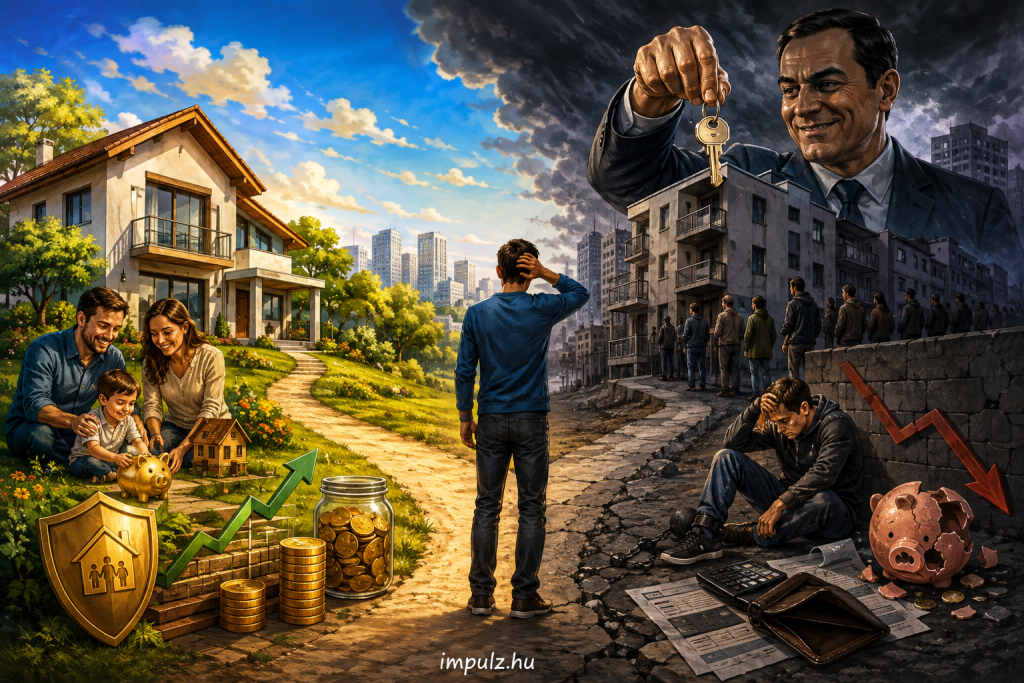
Is the new housing model leading toward security or vulnerability?
A housing program may sound very appealing at first. More affordable housing, a smaller initial financial burden, less worry about taking on a mortgage, and the feeling that it will finally be easier to start an independent life. But there is one question that must not be left unasked: what will happen to you ten, twenty, or thirty years from now if you still have no property of your own? Because there is a big difference between renting a home temporarily and becoming a lifelong tenant.
Renting is not inherently bad. In fact, in certain situations, it can be a very good decision. If you are young, moving around, still looking for your place in life, working abroad, or simply do not want to commit yourself for many years, renting can give you freedom.
The problem begins when renting is no longer a choice, but the only way of life available to you.
Think about it for a moment!
You work for decades. Every month, you pay for your housing. You pay utilities, food, transportation, taxes, and everyday expenses. And if you rent, every single month you have to come up with the money again to use someone else’s property. In the meantime, what do you have left?
This is one of the most important questions that should be asked in any debate about housing policy.
Vedd meg most, az Erópai Unió Elnökség, emlékérme szettet! magyarerme.hu
Because ownership is not just about having an apartment or a house. Owning your own home can provide security, predictability, and a certain degree of financial flexibility. Once it is fully paid for, you no longer have to worry in the same way every month about rising rent, having your lease terminated, or a landlord deciding to use the property for another purpose.
As a tenant, however, you remain constantly dependent on circumstances. You depend on the landlord, market prices, and your income. As you get older, the question of how you will finance all of this becomes especially important. Today you may say, “It will work out somehow,” but will you still say the same thing twenty or thirty years from now?
While you are young and working, it is easier to adapt. If the rent goes up, perhaps you can take on more work. If you need a smaller home, you can move. If you find a job in another city, you can relocate. But what happens when you are older?
Your pension is unlikely to increase at the same pace as rent or the cost of living. And if you do not own your home, you have no property behind you that you can rely on or draw upon if necessary.

Vedd meg most, az Arany János érme szettet! magyarerme.hu
That is why the mindset that says:
“Don’t buy a home! Don’t own property! Rent for your entire life! And spend your money while you are young!”
may sound comfortable, but it isn’t!
However, there is another side to your decisions. If you spend all the money you earn and never build any wealth, you may gradually become more and more financially vulnerable. Not necessarily from one day to the next, and that is precisely what makes it dangerous. It can happen over years, even decades. When you are young, you may not feel it. You have a job, an income, plans for the future, and you assume that you will always have the opportunity to start over.
But does life always turn out the way you planned?
You can become unemployed, your family situation can change, you may have an accident, your housing costs can increase, and there may be periods when you earn less. Eventually, a time may come when you are no longer able to work in the same way as before.
Hazai megyék, vármegyék érme sorozat magyarerme.hu
One of the greatest advantages of owning your own home is precisely that, over time, it can reduce your dependence when it comes to housing. A fully paid-off home does not automatically make you wealthy, but it is a lasting asset and can provide a foundation on which you can build.
Do the math. A home may be expensive, but the mortgage payments and associated costs may represent a lower monthly expense than rent, and at least you are paying for something that will ultimately remain yours. If you own nothing, you have to generate the cost of your housing again every single month. Meanwhile, rents continue to rise, and housing can take up an ever-larger share of your income. This can easily lead to a vicious cycle:
Higher rent.
Less money left to save.
Smaller savings.
Greater vulnerability.
Even fewer opportunities to create your own home.
Eventually, you may find yourself in a situation where you are no longer the one making the choices, your financial circumstances are making them for you.

Államalapítás 1 000. évfordulója magyarerme.hu
That is why it is important not only to look at how much a home costs today, but also to consider what it could mean for you twenty or thirty years from now.
Housing is not simply a monthly expense; housing is also about your future.
It is about whether, when you grow old, there will be a place you can be certain to call your home.
It is about whether, when your income becomes smaller, you will have something that provides security.
It is about whether you will be able to pass something on to your children.
And it is also about whether you will have some form of financial reserve or wealth to fall back on when an unexpected situation arises.
The point is not that you must buy a home at all costs. Not everyone can afford to buy one, and owning property is not necessarily the best decision in every situation. The real question is whether you are consciously building your own security, your future, and your family’s future. That could mean owning property, building savings, creating other forms of wealth, or establishing a diversified financial foundation.
The important thing is not to live your entire life in a way that forces you to start from zero again every month. Because the distance between the freedom of youth and the vulnerability of old age can sometimes be very small.
Eredeti MNB rolnik nagy választékban! magyarerme.hu
Today you might say: “I would rather rent because that way I am free.”
But if you build no wealth along the way, you may eventually discover that what you thought was freedom was actually dependence.
And here lies one of the most important parts of the whole question: who benefits if you remain a tenant for your entire life?
For the owner, the property is an asset. You, meanwhile, pay every month for the right to use it. If the value of the property increases, the owner’s wealth may increase. If the rent rises, the owner’s income may increase. You, however, pay more for the same housing.
This does not necessarily mean that every property owner has bad intentions or that every landlord wants to take advantage of their tenants. It would be wrong to generalize.
But it is worth looking at how the system works in practical terms: the owner has an asset, while the tenant has an ongoing expense. That is why it is also in your interest to have something of your own, or at least enough savings and financial assets to prevent you from becoming completely dependent on others.
Millenniumi 2 000 forint bankjegy!
Vedd meg most! magyarerme.hu
Do not let anyone tell you: “Owning anything is unnecessary. Just spend your money!”
Think further ahead, because today a new phone, an expensive holiday, or a new car may bring you a much more visible sense of enjoyment.
But twenty years from now, something completely different may matter: a secure home, a mortgage-free property, savings, or a financial reserve that you can rely on when something goes wrong.
One of life’s biggest mistakes can be to focus only on today while forgetting that tomorrow will eventually come.
There is something else, too: vulnerability is not only a financial issue. It can also be emotionally exhausting to constantly worry about whether you will still be able to afford the same home next year.
What happens if the landlord raises the rent?
What happens if they decide to sell?
What happens if you have to move?
What happens if you can no longer work as much?
What happens if you have an accident?
What happens if the landlord dies?
These questions can create uncertainty over the long term.

Vedd meg most, a Forgalmi sorok, emlékérme változatait! magyarerme.hu
For many people, however, owning their own home is not simply four walls. It is an anchor. A place where they do not have to fear losing their housing from one day to the next because of another person’s decision.
So before someone tells you “You don’t need to own anything,” stop for a moment.
Ask yourself: “What will happen to me when I am no longer young?”
How will I pay for my housing?
What will I live on?
How much will my income be then?
What financial reserves will I have?
Will I have my own home?
Will I have something I can pass on to my children?
And if, in a single month, I cannot pay the rent, how secure am I?
These questions cannot be answered with a single political slogan, and they should not be.

Vedd meg most, a 2026. évi Aranyforint PP forgalmi sort! magyarerme.hu
Housing is a long-term life strategy. Young people should be given opportunities to create their own homes.
A rental housing system is also necessary.
But at the same time, we should not create a world in which owning a home becomes a privilege reserved only for a small, wealthy segment of society, while the majority spend decades contributing to the growth of other people’s wealth.
Because if you tell an entire society, “You should own nothing,” sooner or later people will lose more than what is in their wallets. They may also lose their sense of security, their freedom of choice, and their confidence in the future.
That is why you do not have to decide simply whether “I should buy a home or rent one.”

200 forintos forgalmi erme emlékváltozatai!
Vedd meg most! magyarerme.hu
You need to decide how you want to create security for yourself and your family!
If you rent, have savings.
If you can, build wealth.
If you want to own your own home, look for an option that does not push you into unmanageable debt.
Do not take on a loan that could financially overwhelm you after a single difficult turn in life.
Do not spend everything simply because you can afford it today and the current government wants to encourage this.
Do not believe anyone who tells you that your future does not matter, because it does matter, very much.
The most important question is not how attractive a housing option may seem today, but what it will give you thirty years from now.

2016. Magyarország új alaptörvénye – Felülnyomott blokk
Vedd meg most! magyarbelyeg.hu
Concrete examples from everyday life
• Young renter: today, they pay HUF 180,000 in rent and think it is still manageable. But if housing costs continue to rise year after year, eventually less and less money may be left for savings.
• Family who owns its home: they may have paid a mortgage for many years, but once the property becomes debt-free, their housing expenses can decrease significantly.
• Older renter: they can no longer work as much as they used to. Yet they still have to pay rent alongside their pension. If the rent is high, housing can take up a significant portion of their income.
• Renter with savings: they do not own a home, but they regularly save money and build wealth. As a result, they may have more room to maneuver in an unexpected situation than someone who spends all their income every month.
• The “somehow it will work out” lifestyle: someone spends decades without saving because they assume they will always have a job and will always be able to pay the rent. But an unexpected drop in income can quickly turn their entire life upside down.
• The conscious decision: someone rents because it suits them at the moment, but at the same time they save money, invest in their education, build wealth, and continuously look for ways to reduce their vulnerability in the future.
You decide what kind of life you want, but when it comes to housing, do not ask only: “How much does it cost today?” Also ask yourself: “What will this mean for me ten, twenty, or thirty years from now?” Because you do not start building your future when you already need it, you start building it today.
And perhaps this is the most important message: your goal should not simply be to have a roof over your head at any cost, but to create a level of security that even a sudden rent increase cannot take away from you from one month to the next.
💎 Written by József Nyitrai 18.08.2026
💎 image: Mi
💎 impulz.hu